

Finding the best mental health podcasts sounds simple. Type it into Spotify, get 10,000 results, pick one at random, and give up after a single worthy-but-boring episode about the healing power of journalling. The problem isn't that good mental health podcasts don't exist. It's that the mediocre ones have completely swamped them. And when you're already anxious, low, or just quietly not okay, wading through average content to find something useful is the last thing you need. That's exactly why we built this list. Every show here has been picked because it's honest, accessible, and genuinely worth your time - not because it ticks a wellness checklist. No fluff. No faff. Just the good stuff.
Why Mental Health Podcasts Actually Work (The Science Bit, Kept Short)
Mental health content has existed for decades. Books, leaflets, hotlines, websites. So why are podcasts the format that's actually getting through to people?
It comes down to how your brain receives information when you're not on guard.
Why Audio Hits Different When You're Struggling
When you're anxious or low, reading takes effort. Your concentration is shot, your eyes skip lines, and you close the tab after two paragraphs.
Audio asks almost nothing of you.
You can listen while you're driving, doing the washing up, or staring at the ceiling at 1am. The barrier to entry is basically zero - and that matters enormously when motivation is already running on empty.
There's also something about a voice. Hearing a real person talk about the hard stuff feels less clinical than reading bullet points about "coping strategies." It lands differently. It feels less like a self-help manual and more like a conversation you're quietly sat in on.
The "Mate Effect" - Why Podcast Hosts Feel Like Someone You Know
Researchers call it a parasocial relationship - the sense that you genuinely know someone you've never met.
Regular podcast listeners develop a real sense of familiarity with hosts. Same voice, same cadence, same bad jokes every episode. Over time, it starts to feel less like consuming content and more like catching up with someone you trust.
That's not a trivial thing when you're talking about mental health.
Trust lowers your defences. When a host you feel you know talks openly about anxiety, grief, or the time they completely fell apart, it gives you permission to acknowledge your own stuff without the shame spiral that usually follows.
No GP waiting room. No awkward explanation. Just a voice in your ears saying "yeah, me too."
How Listening Quietly Normalises the Loud Stuff
Repeated, low-pressure exposure to a topic reduces the stigma around it. That's what the research backs up.
Every time you listen to someone talk honestly about depression or anxiety without the world ending, your brain quietly recalibrates. It files it under "normal human experience" rather than "dangerous territory."
Not therapy. Not a replacement for professional support. But a genuinely effective way to make the subject feel less terrifying over time — and we all know how terrifying it can feel to even start.
And for blokes especially, who've often spent years dodging the topic entirely, just getting comfortable with the conversation is a legitimate first step.
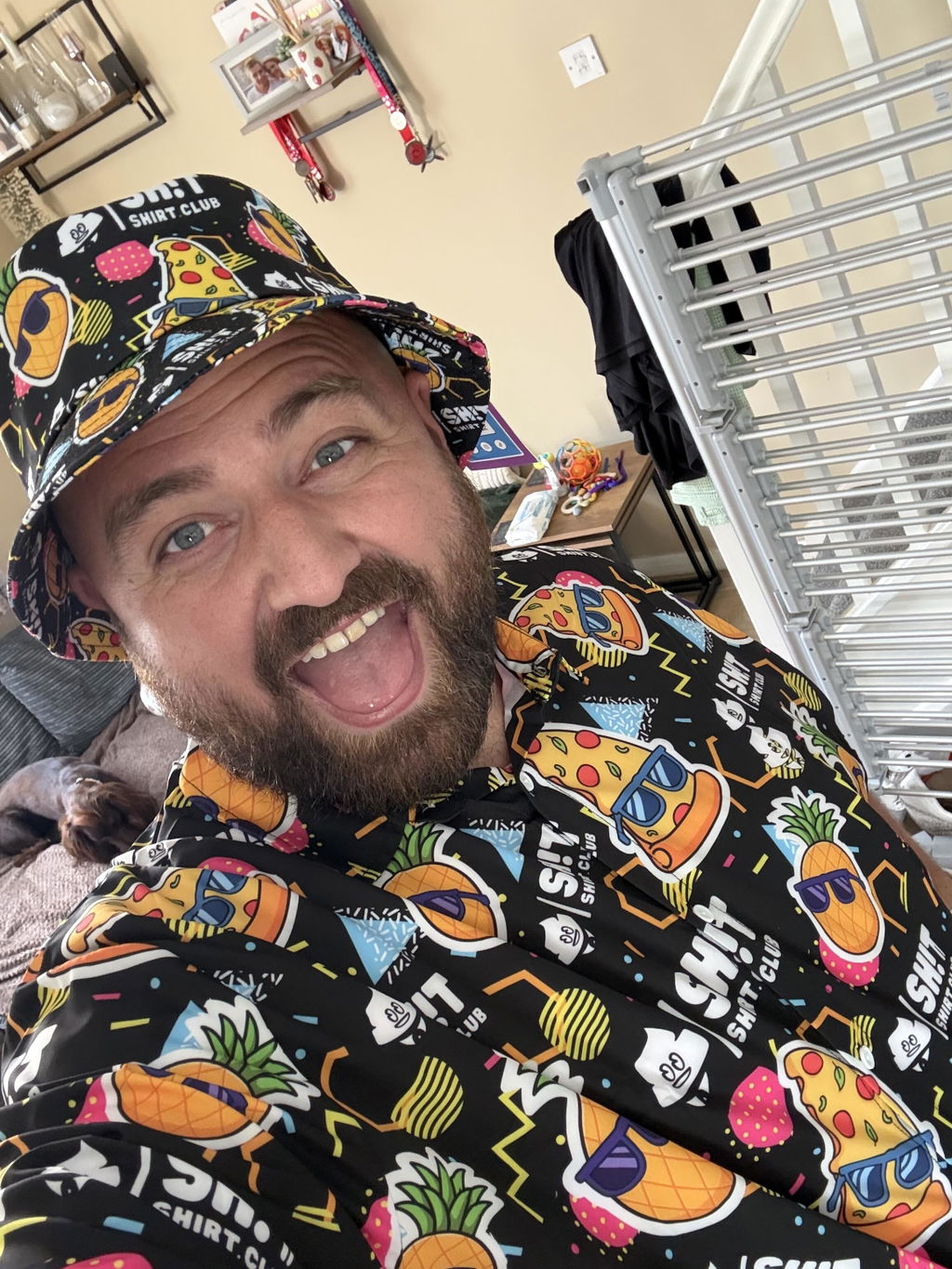
Shit Shirt Club was built on exactly that idea. Start the conversation. Wear it loud. Let people in. Podcasts do the same thing, just with less laundry.

How We Picked the Best Mental Health Podcasts
There are thousands of mental health podcasts out there. Genuinely thousands. And a large chunk of them are either painfully worthy, aggressively spiritual, or hosted by someone whose only qualification is owning a microphone.
We cut through the noise using three straightforward criteria.
Hosted By People Who Actually Know What They're Talking About
Every podcast on this list is either hosted by a qualified mental health professional, someone with significant lived experience, or both.
Passion doesn't equal expertise, and when someone is navigating real anxiety or depression, they deserve more than a well-meaning chat.
We looked for hosts who could hold a conversation that felt human and grounded in something real. Not a lecture. Not a therapy session in disguise. Just someone who clearly knows their stuff and doesn't feel the need to prove it every five minutes.
No Therapy-Speak. No Fluff. No Nonsense.
We've all sat through it. Forty minutes of gentle affirmations, a sponsored segment about a wellness app, and absolutely nothing you can actually use.
We skipped those entirely.
Every show on this list speaks plainly. No jargon minefield. No assuming you've already done six months of CBT homework. Honest, accessible conversation that treats you like an adult.
If we found ourselves zoning out or reaching for our phones halfway through an episode, it didn't make the cut.
Enjoyable Enough That You'll Actually Come Back
This one sounds obvious. It isn't.
A lot of mental health content is so relentlessly heavy that one episode leaves you needing a lie down. The best podcasts balance honesty with something that keeps you pressing play - whether that's humour, curiosity, a genuinely compelling host, or all of the above.
Mental health content that nobody listens to helps nobody. So enjoyability wasn't a nice-to-have on our list. It was a requirement.
Is This Podcast Right for You?
| Podcast Name | Best For | Tone | Avg. Episode Length |
| The Diary of a CEO | Big life questions | Conversational, punchy | 60-90 mins |
| Ten Percent Happier | Anxiety, beginners | Calm, accessible | 45-60 mins |
| The Happiness Lab | Depression, curiosity | Warm, science-backed | 30-45 mins |
| Terrible, Thanks for Asking | Honest emotion, grief | Raw, funny, human | 30-40 mins |
| The Mental Illness Happy Hour | Depression, addiction | Unfiltered, real | 60-90 mins |
| Unlocking Us with Brene Brown | Shame, vulnerability | Thoughtful, warm | 45-60 mins |
| Feel Better Live More | General wellbeing, men | Practical, grounded | 60-90 mins |
| Therapy Chat | Anxiety, trauma | Professional, accessible | 30-45 mins |
| In Recovery | Addiction, depression | Honest, clinical | 30-60 mins |
| The Anxiety Coaches Podcast | Anxiety, daily tools | Calm, practical | 20-30 mins |

The Best Mental Health Podcasts for Men
Let's be straight about something. Most mental health content is not built with blokes in mind.
It's not malicious. It's just that the loudest voices in the wellness space have historically skewed toward a different audience. Which means a lot of men scroll through podcast charts, see nothing that feels relevant, and quietly close the app.
That changes here.
Why Men Are Still the Hardest to Reach (And Why That's Changing)
Men account for around three quarters of all suicides in the UK. Yet men are significantly less likely to seek help, talk to a GP, or even admit to themselves that something's wrong.
A big part of that is conditioning. You crack on. You don't make a fuss. You're fine.
Podcasts are quietly dismantling that, partly because they don't feel like "getting help."
You're just listening to someone talk. Nobody knows. Nothing is being admitted. It's the lowest-stakes entry point into mental health conversation that exists.
And increasingly, the hosts having these conversations are men who sound like the bloke down the pub. Not therapists in cardigans or life coaches flogging a course. Just honest people talking plainly about hard things.
The Diary of a CEO - Big Conversations, Zero Cringe
The Diary of a CEO — Steven Bartlett built one of the UK's most listened-to podcasts by doing something simple: having genuinely honest conversations with genuinely interesting people.
Mental health sits naturally alongside business, purpose, relationships and failure throughout the show. It never feels like a special episode with a trigger warning. It just comes up, the way it does in real life when you're talking to someone you trust.
- Best for: Men who wouldn't describe themselves as "into" mental health content
- What makes it different: Normalises vulnerability without ever making it the point
- Where to find it: Spotify, Apple Podcasts, YouTube
Feel Better Live More - Practical Tools for Real Life
Feel Better Live More — Dr Rangan Chatterjee takes a whole-person approach. Sleep, stress, relationships, movement, mental load. He connects the physical and the psychological in a way that makes both feel manageable rather than overwhelming.
Practical without being preachy. Evidence-based without being dry. And crucially, it doesn't assume you're already halfway through a wellness journey.
- Best for: Men who want actionable stuff, not just conversation
- What makes it different: Bridges physical health and mental health in plain language
- Where to find it: Spotify, Apple Podcasts
Other Bloke-Friendly Shows Worth Your Time
Not every great podcast for men markets itself as a men's mental health podcast. Some of the most useful ones just happen to cover the territory honestly.
Ten Percent Happier with Dan Harris is worth a mention here. Harris is a former news anchor who had a panic attack live on air, then spent years figuring out what actually helps. His scepticism is baked into every episode, which makes it feel credible rather than evangelical.
The Mental Illness Happy Hour with Paul Gilmartin goes darker and deeper than most. It's not always an easy listen, but it's an honest one. For men who are past the point of gentle nudges, it's one of the most validating podcasts available.
A note before we go further: You don't have to be in crisis to press play. These podcasts aren't crisis lines and they're not therapy. They're just honest conversations that make the subject feel a bit less like a minefield. Start wherever you like.

The Best Mental Health Podcasts for Women
Women engage with mental health content at significantly higher rates than men. Which means the podcast space has responded accordingly - there's a lot out there.
The challenge isn't finding options. It's finding ones that are genuinely useful rather than just aesthetically calming.
Why the Women's Wellness Space Can Feel Overwhelming
Search "mental health podcasts for women" and you'll find no shortage of results. Soft music intros, pastel cover art, hosts who speak exclusively in affirmations.
Some of that is genuinely helpful. A lot of it isn't.
The shows worth your time are the ones that are honest first and comforting second. The ones where the host doesn't pretend to have everything figured out, and the conversations go somewhere real rather than circling gently around the hard stuff.
Unlocking Us with Brene Brown - Vulnerability as a Strength
Unlocking Us with Brene Brown — Dr Brene Brown has spent decades researching shame, courage and human connection. Her podcast feels like the smartest conversation you've had in months, without ever making you feel like you're being lectured.
Episodes range from deeply personal to research-heavy, but Brown has a rare ability to make both feel accessible.
- Best for: Women navigating shame, perfectionism or difficult relationships
- What makes it different: Grounded in two decades of genuine academic research
- Where to find it: Spotify, Apple Podcasts
Terrible, Thanks for Asking - Honest Without the Gloss
Hosted by Nora McInerny, Terrible, Thanks for Asking exists for anyone who's ever said "fine, thanks" when they absolutely were not fine.
McInerny lost her husband, her father and a pregnancy in the space of six weeks. She talks about grief, mental health and the messiness of being human with a dark humour that makes the hard stuff bearable rather than unbearable.
- Best for: Women dealing with grief, loss or the pressure to appear okay
- What makes it different: Funny and devastating in equal measure, often in the same episode
- Where to find it: Spotify, Apple Podcasts

Best Mental Health Podcasts for Anxiety and Depression
Anxiety and depression are the two most searched mental health topics in the UK.
They're also the two most misrepresented in wellness content - either catastrophised into something terrifying or glossed over with breathing exercises and positive thinking.
The podcasts below do neither. They take both seriously without making you feel like a case study.
Best Podcasts for Anxiety - Practical, Calm, Actually Useful
Anxiety content has a specific failure mode: it either triggers the thing it's trying to help, or it's so gentle it says nothing useful at all.
The shows below thread that needle. They're grounded, practical and written for people who are actually in it - not people who've already come out the other side.
Ten Percent Happier - Meditation Without the Woo
Dan Harris had a panic attack live on national television, then spent years figuring out what actually helps. Ten Percent Happier is sceptic-friendly by design - every claim gets interrogated, every technique questioned. Built specifically for people who've always rolled their eyes at wellness content.
- Best for: Anxiety beginners who need proof before they'll try anything
- What makes it different: Science-first, zero spiritual pressure
- Where to find it: Spotify, Apple Podcasts
The Anxiety Coaches Podcast - Straightforward and No-Nonsense
Hosted by Gina Ryan, The Anxiety Coaches Podcast does exactly what the name suggests. Short, focused episodes of 20-30 minutes that give you something concrete to work with - no hour of context-setting before anything useful happens. Ideal for limited time or limited concentration.
- Best for: People who want tools, not just conversation
- What makes it different: Consistently short and consistently actionable
- Where to find it: Spotify, Apple Podcasts
Terrible, Thanks for Asking - Honest Without Being Heavy
Already mentioned above, but it earns its place here too. It doesn't try to fix you - it just makes you feel considerably less alone, which is sometimes the more useful thing anyway. Nora McInerny covers anxiety and grief with a wit that makes difficult episodes genuinely listenable.
- Best for: Anyone who finds straight wellness content a bit much
- What makes it different: Humour and honesty in proportions that actually work
- Where to find it: Spotify, Apple Podcasts
Best Podcasts for Depression - Hopeful Without the Toxic Positivity
Depression content has its own specific failure mode: relentless optimism that feels completely disconnected from what depression actually feels like.
Nobody who's genuinely low wants to hear that gratitude journalling will sort them out.
The shows below are honest about how hard it gets, without leaving you worse off than when you started.
The Mental Illness Happy Hour - Raw, Real, Relatable
The Mental Illness Happy Hour with Paul Gilmartin interviews comedians, artists, abuse survivors and everyday people about their darkest experiences. The show's central argument is that naming the hard stuff out loud makes it less powerful - and episode after episode, it proves that point. Not an easy listen, but one of the most honest mental health podcasts ever made.
- Best for: People who are past gentle introductions and want something real
- What makes it different: Goes further than almost any other show in the space
- Where to find it: Spotify, Apple Podcasts
Unlocking Us with Brene Brown - Shame, Vulnerability and Why It Matters
Depression and shame are closely linked in ways that don't get discussed enough.
Brown's research on shame resilience is some of the most practically applicable mental health content available - delivered in a format that feels like a conversation rather than a lecture.
- Best for: People whose depression is tangled up with self-worth
- What makes it different: Tackles the emotional root rather than just the symptoms
- Where to find it: Spotify, Apple Podcasts
In Recovery - When It Goes Deeper Than Low Moods
In Recovery, Dr Nzinga Harrison's podcast was built around addiction, but covers depression and mental illness with the same rigour. One of the few shows hosted by a practising psychiatrist that still manages to feel human rather than clinical. Worth your time if you're dealing with something beyond everyday low mood.
- Best for: People navigating depression alongside addiction or complex mental health
- What makes it different: Clinical expertise delivered with genuine warmth
- Where to find it: Spotify, Apple Podcasts
Podcasts That Cover Both - Your All-Rounders
Not every episode fits neatly into one box. These two shows move fluidly across anxiety, depression and general mental wellbeing without losing focus.
The Happiness Lab - Science-Backed and Surprisingly Fun
Dr Laurie Santos is a Yale professor whose course on happiness is the most popular in the university's history. The Happiness Lab podcast applies genuine behavioural science to the everyday stuff that makes life harder than it needs to be - covering anxiety, depression and wellbeing without ever feeling like homework.
- Best for: Anyone who wants to understand the why behind how they feel
- What makes it different: Academic credibility, zero academic stuffiness
- Where to find it: Spotify, Apple Podcasts
Therapy Chat - When You Want the Expert Angle
Therapy Chat with Laura Reagan cover anxiety and depression with equal depth in plain, accessible language. It's the podcast equivalent of sitting in on a really good therapy session without having to say anything yourself. No prior knowledge required.
- Best for: People who want professional insight in digestible form
- What makes it different: Consistently strong guests, consistently plain language
- Where to find it: Spotify, Apple Podcasts
Anxiety vs Depression: Which Podcast Fits Your Headspace?
| Podcast | Great for Anxiety | Great for Depression | Good for Both | Beginner Friendly |
| Ten Percent Happier | Yes | No | No | Yes |
| The Anxiety Coaches Podcast | Yes | No | No | Yes |
| Terrible, Thanks for Asking | Yes | Yes | Yes | Yes |
| The Mental Illness Happy Hour | No | Yes | Yes | Heavy at times |
| Unlocking Us with Brene Brown | Yes | Yes | Yes | Yes |
| The Happiness Lab | Yes | Yes | Yes | Yes |
| Therapy Chat | Yes | Yes | Yes | More clinical |
| In Recovery | No | Yes | Yes | Specific audience |

Best Mental Health Podcasts on Spotify Right Now
Spotify has quietly become the default home for podcast listening in the UK. It's where most people already are, which means zero friction between deciding to listen and actually pressing play.
No new app. No new account. Just open Spotify and go.
Every Show on This List - Free on Spotify Today
Every podcast on this list is available on Spotify right now, free, with full access to back catalogues. No premium subscription required for any of them.
Pro Tip - Download for Offline Listening (Festival Fields Have Terrible Signal)
This one's for the SSC crowd specifically.
If you're heading to a festival, a stag do, or anywhere that involves a field and questionable mobile coverage, download your episodes before you leave the house.
Spotify's offline mode works perfectly and costs nothing extra on the free tier.
A long drive to a festival site with a decent podcast queued up is genuinely one of life's underrated pleasures. Better than three hours of adverts on the radio, anyway.
How to download on Spotify:
- Find the episode or show you want
- Hit the download button (the arrow pointing downward)
- Listen offline whenever signal decides to pack it in
Simple as that.

The Shit Shirt Club Seal of Approval - Our Top 3 Picks
Right. You've got the full list. You've seen the tables. You know the options.
But if you're the kind of person who just wants someone to point at three things and say "start here" - this section is for you.
These are our personal picks. Not the most downloaded. Not the most awarded. The three we'd genuinely recommend to a mate over a pint.
Pick #1 - The One for Blokes Who'd Never Usually Press Play
The Diary of a CEO with Steven Bartlett
If you've never listened to a mental health podcast in your life and the whole concept makes you want to change the subject, start here.
Steven Bartlett doesn't make mental health the point. He makes honest conversation the point. Vulnerability, failure, grief and anxiety all come up naturally - the same way they do when you're actually talking to someone you trust rather than reading a leaflet about them.
You won't feel like you're doing something worthy. You'll just feel like you're listening to a genuinely interesting conversation. And somewhere in the middle of it, something might land.
That's the whole idea, really.
- Find it on: Spotify, Apple Podcasts, YouTube
- Episode length: 60-90 mins
- Start with: "The Man That Knows Everything"
Pick #2 - The One for When You Need a Laugh AND a Reality Check
Terrible, Thanks for Asking with Nora McInerny
This one is funny. Properly funny, in the way that only things that are also a bit devastating can be.
Nora McInerny lost more in six weeks than most people lose in a lifetime. She turned that experience into one of the most disarmingly honest podcasts about mental health, grief and being a human being that exists.
It won't fix anything. It isn't trying to. But it will make you feel significantly less like you're the only person holding it together with gaffer tape and willpower.
Wear a loud shirt. Put this on. Feel briefly less alone. That's a decent Tuesday evening right there.
- Find it on: Spotify, Apple Podcasts
- Episode length: 30-40 mins
- Start with: "A Widow's Guide to Dead Husbands"
Pick #3 - The One to Send to a Mate Without It Being Weird
The Happiness Lab with Dr Laurie Santos
Here's the situation. You've got a mate who's clearly not doing great. You want to say something but you don't know how to start the conversation without it getting awkward.
Send them an episode of The Happiness Lab.
It's science-backed, genuinely interesting, and doesn't announce itself as mental health content in a way that puts people on the back foot. It just talks honestly about what makes life harder than it needs to be, and what the research says about feeling better.
Low stakes. High value. No awkward conversation required - although one might follow, and that's kind of the point.
It's what a shit shirt does in podcast form. Starts something without forcing anything.
- Find it on: Spotify, Apple Podcasts
- Episode length: 30-45 mins
- Start with: "Don't Think About It"

How to Actually Build a Mental Health Listening Habit
Knowing about a podcast and actually listening to it regularly are two completely different things.
Most people save an episode, forget about it for three weeks, feel vaguely guilty, and never go back. The habit never forms because nobody told them the practical bit - how to actually make it stick without it feeling like another thing on the to-do list.
Here's how to do it properly.
Stack It With Something You Already Do
The most reliable way to build any new habit is to attach it to something you already do without thinking.
You don't need to carve out special podcast time. You don't need to sit quietly in a dedicated listening chair. You just need a commute, a kitchen, a gym, or a dog that needs walking.
Mental health podcasts work particularly well as background to low-concentration activities. Your hands are busy, your brain is slightly idle, and you absorb more than you'd expect.
When to Listen: Matching Podcasts to Your Daily Routine
| Daily Activity | Recommended Podcast | Why It Works |
| Morning commute | The Diary of a CEO | Gets you thinking without overwhelming you |
| Gym session | Feel Better Live More | Energetic, practical, easy to dip in and out |
| Cooking dinner | The Happiness Lab | Conversational, no need to watch a screen |
| Walk or run | Ten Percent Happier | Short episodes, fits a 30-minute loop |
| Winding down at night | Terrible, Thanks for Asking | Honest and calming, not stimulating |
| Long drive | Long drive The Mental Illness Happy Hour | Long-form, holds attention on a motorway |
Start With One Episode, Not a Six-Season Backlog
We've all done this. Found a show with 400 episodes, felt immediately obligated to start from episode one, discovered the audio quality from 2016 is terrible, and quietly abandoned the whole thing.
Don't do that. Pick one episode from the list we've already recommended. A specific one, not just "any episode." Specificity removes the decision fatigue that kills most good intentions before they start.
One episode. That's the whole commitment. See how it lands.
It's Fine to Skip. This Isn't School.
Some episodes won't land. Some topics won't be for you right now. There'll be weeks where you listen to four back to back and weeks where you don't fancy it at all.
That's completely fine. There's no curriculum here and nobody is taking attendance.
The moment it starts to feel like homework is the moment it stops being useful. Follow your interest, skip what doesn't grab you, and don't keep score.
Send One Episode to a Mate - That's the Whole Point
Here's something that happens when you find a podcast episode that genuinely helps: you want to send it to someone.
Do that. Sharing an episode is one of the lowest-effort, highest-impact ways to start a conversation about mental health without it needing to be a big serious moment.
No speech required. No checking in. Just "heard this, thought of you" and a link. The conversation that follows might surprise you.
It's the same logic as wearing a shit shirt, when you think about it. You're not delivering a lecture on mental health awareness. You're just putting something out there and seeing what comes back.
Sometimes that's all it takes.

FAQ - The Stuff People Actually Want to Know
Do I Need to Be Struggling With My Mental Health to Listen to Mental Health Podcasts
Not even slightly.
Most regular listeners aren't in crisis. They're just people who find honest conversations about human experience more interesting than true crime or business advice.
Mental health podcasts are for anyone who has a brain and occasionally finds it difficult. Which is everyone, at some point. You don't need a diagnosis or a bad week to press play.
What's the Best Mental Health Podcast for Someone Who's Never Listened to One Before?
If you've never listened before, we'd suggest one of three depending on what you're after.
Go with The Diary of a CEO if you're a bloke who'd normally run a mile from anything labelled wellness content. Try The Happiness Lab if you want something science-backed that doesn't take itself too seriously. Pick Terrible, Thanks for Asking if you want something honest, human and occasionally funny in a way that catches you off guard.
Any of those three will do the job. Pick the one that sounds least terrible and go from there.
Are There Any Short Mental Health Podcasts for People With No Time?
Yes. A few on this list are specifically worth flagging for shorter episodes:
- The Anxiety Coaches Podcast - most episodes land between 20-30 minutes
- The Happiness Lab - typically 30-45 minutes and easy to pause mid-episode
- Terrible, Thanks for Asking - 30-40 minutes and self-contained enough to dip in and out
You don't need an hour. A 25-minute episode on a commute twice a week is more than enough to make it worth your time.
Can Podcasts Replace Therapy?
No. And any podcast that suggests otherwise is one to avoid.
Podcasts are a genuinely useful tool for normalising mental health conversation, reducing stigma and picking up practical techniques. They are not a clinical intervention and they're not designed to be.
If you're dealing with something serious, a podcast is a decent companion to professional support - not a substitute for it. The NHS has options, as do a growing number of charities and low-cost therapy services.
Think of podcasts as the conversation that makes you more likely to pick up the phone and ask for help. That's already a significant thing.
How Do I Get a Mate to Listen Without It Being Weird?
Honestly, the instinct to make it a big moment is what makes it weird. Sending a message that says "I think you should listen to this because I'm worried about you" will get you left on read faster than anything.
Just send the episode like you'd send a funny video. "Heard this on the way to work, actually really good" does the job without anyone needing to have a feelings conversation before they're ready for one.
Here's what sometimes happens next. They listen, they send something back, and suddenly you're two blokes talking honestly about something that matters — without either of you having to make it a big deal to get there.
That's the whole point of Shit Shirt Club too, when you think about it. You don't hand someone a leaflet about mental health. You wear something ridiculous, someone laughs, a conversation starts, and something shifts.
Small entry points. Real impact.

The Bottom Line
Mental health podcasts won't fix everything. But they'll make the conversation feel less terrifying and sometimes, that's exactly where things need to start.
Here's what we covered:
- Why podcasts work - low barrier, high trust, zero waiting rooms
- The best shows for men - built for blokes who'd never usually press play
- The best for women - honest first, comforting second
- The best for anxiety and depression - no toxic positivity, no therapy-speak
- How to actually build the habit - stack it, start small, send one to a mate
At Shit Shirt Club, we believe the same thing podcasts do, that starting the conversation is half the battle. Our shirts do it loudly. Podcasts do it quietly. Both work.
If you're ready to wear the message as well as hear it, join Shit Shirt Club and support mental health awareness one outrageously bad shirt at a time. 🤙