

There is a particular moment at a Halloween party when the door opens and somebody has arrived in an excellent costume made from clothes you recognise. The shirt is their usual shirt. The boots are their usual boots. The face, however, belongs to somebody who has been buried in a suspicious forest. That is the useful territory: a complete Halloween look, with enough thought behind the makeup and accessories that the clothes become part of the costume.
These Halloween outfit ideas focus on spooky adult party looks. You will find a fungal zombie, a neon skeleton, vampire outfits and a creepy clown, followed by ways to turn individual looks into couples' and group costumes. Each idea explains the clothes, the finishing details and the changes that make it practical for an evening out. Some use Halloween shirts; others work with entirely ordinary separates. You can go colourful, monochrome, heavily made up or almost makeup-free.
For Saturday 31 October 2026, build something you want to wear beyond the first photograph. A recognisable costume should still let you talk, sit down and enjoy yourself. Start with the monster you want to be, then make the outfit work for your body, your plans and the time you actually have.
Scary Halloween outfits that work at a party

Choose the kind of scare
A spooky costume does not have to mean fake blood. A skeleton face can be striking through its shapes. A vampire can look unsettling through a sharp collar and painted fangs. A zombie can rely on an uneven complexion and hollow-looking cheeks. A clown can become creepy through exaggerated makeup and proportions. Decide which visual effect appeals to you before buying accessories, because each one needs a different kind of preparation.
Think about the room where you will wear it. At a brightly lit house party, small makeup details can be visible. In a darker pub, a clear silhouette or bold cheek design may communicate more effectively. A giant headpiece may make a dramatic entrance but become a nuisance once you want to sit with friends. Choose the costume for the evening you have planned, including the unglamorous parts such as the queue and the journey home.
If makeup is the part you enjoy, choose a face-led outfit such as the neon skeleton. If you like making things, the fungal zombie gives you a small headpiece to build. If neither sounds appealing, a vampire cape and familiar clothes can carry much of the idea. Snazaroo's Halloween inspiration shows how different face designs communicate different characters, helping you judge what you would actually enjoy trying.
You can decide how frightening the result should be without abandoning the theme. Use clean graphic shapes for a lighter skeleton, or stronger cheek shading for a more unsettling one. A zombie can look eerie without wounds. A clown can be strange without carrying a weapon. Keep the event and the other guests in mind, particularly if the party includes people who are not looking for an intense horror experience.
Build an outfit people recognise
Write the costume name at the top of a page and list the visible details beneath it. For a fungal zombie, those might be mushroom imagery, shadowed cheeks and a small fungi headpiece. For a vampire, a cape collar and fangs are more useful than an elaborate invented occupation. If the list contains mostly backstory rather than clothes or makeup, turn it into something another person can actually see.
You do not need every possible detail. Choose the ones that make sense together, then try the whole outfit on. A skeleton shirt beneath skull makeup may already communicate the idea. Adding a cape, a giant hat and a different monster mask could make it less clear, even if each item is individually entertaining. That is a question of costume meaning, not an instruction to reduce colour or stop wearing clashing prints.
Use your existing wardrobe as the starting point. Check what you can borrow, and make a note of anything that needs to be bought or made. Oxfam's guide to keeping old clothes useful offers practical routes for reuse. If you need a jacket or waistcoat, BHF's shops are another place to look. A specific missing item is a better shopping target than a vague instruction to purchase something spooky.
Keep the costume recognisable when your hands are empty. You will put a prop down eventually. If the entire idea disappears with it, move some of that information onto the clothes or headwear. A little preparation here prevents an evening spent holding a sign while trying to eat crisps, which is less a costume than an administrative appointment.
Make a fungal zombie costume with a mushroom shirt

Build the infected-forest look
A fungal zombie combines an undead face with mushroom shapes. It is a Halloween costume idea rather than a claim about real fungi or disease, so keep the styling clearly fictional. Begin with trousers or a skirt you can move in, add a mushroom-print shirt and choose boots or trainers for the actual venue. A small mushroom headband and grey-green makeup make the transformation visible without requiring a large costume suit.
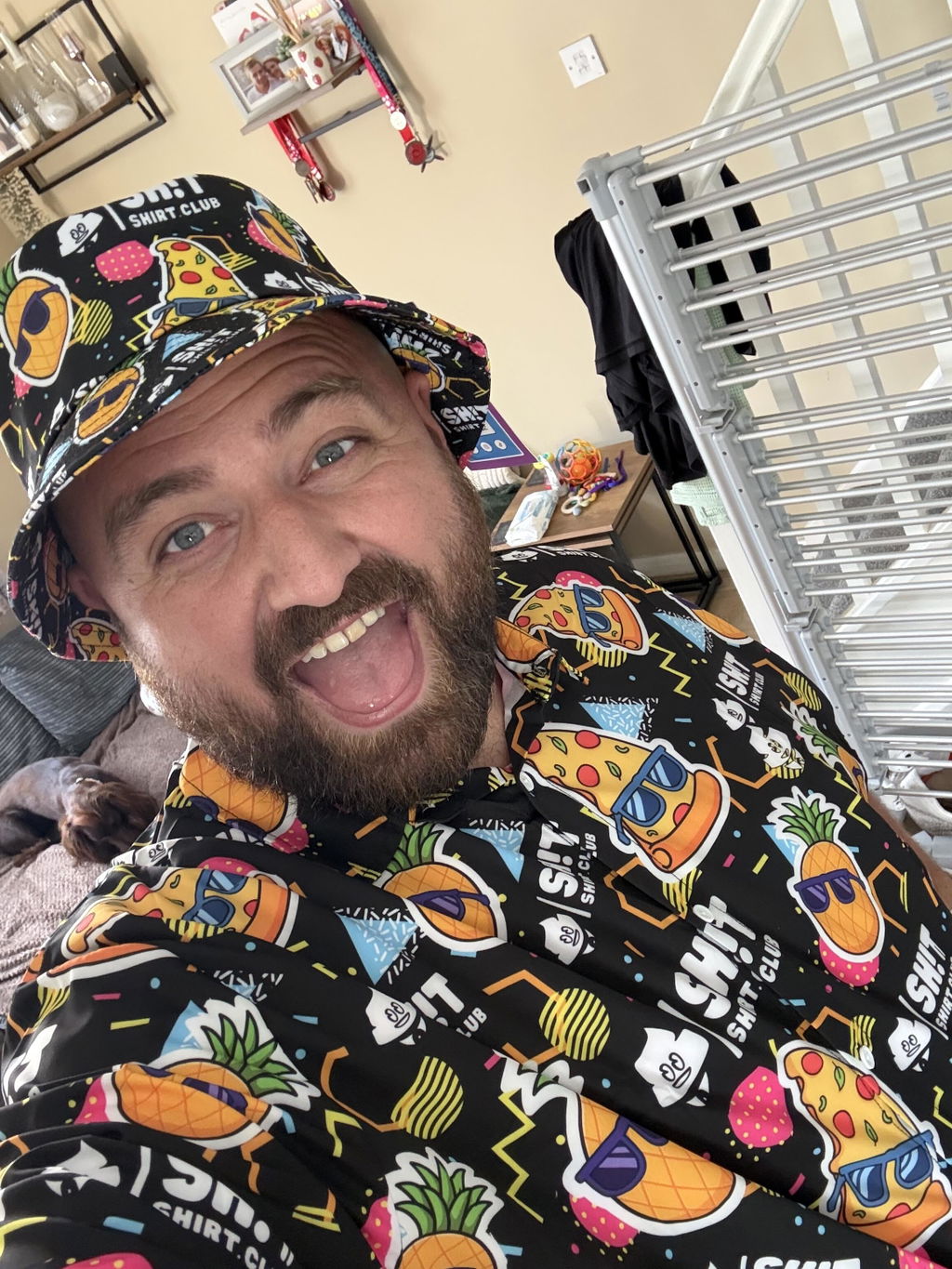
The Black Out Mushroom Shirt gives this outfit a useful base. Its neon mushrooms and skulls already connect with the costume. Wear it buttoned if you want the print across the full front, or open over another top if that feels more comfortable. Avoid hiding all of it beneath a jacket and then expecting the mushroom theme to remain obvious. Try your outer layer on before choosing where the headpiece should sit.
For the headpiece, make a few small felt mushroom shapes and attach them securely to a comfortable plain headband while it is off your head. Keep them light and away from your eyes. You can use a simple cap-and-stem shape rather than modelling realistic fungi. A larger cardboard mushroom cap is another option, but it changes the outfit into a more obvious toadstool creature and takes more space to carry.
Woodlark's mushroom-costume tutorial is useful if you want to understand a fuller cap construction. Treat the tutorial as a making resource and adapt the scale to your own needs. Do not attach real unknown mushrooms to the costume. Drawn, felt or paper versions let you create the shape without handling something you cannot identify.
Create the effect without prosthetics
Use makeup to suggest the transformation through colour and shape. Grey-green cheek shading, a darker hollow beneath the cheekbone and a few branching lines can create an eerie face without fake wounds. Place the lines on the cheek or forehead where your chosen cosmetics are intended to be used. Keep them deliberate and visible rather than adding lots of tiny marks that disappear from a short distance.
The outfit can stay colourful. The bright print does not need to become brown or dirty to count as a zombie costume. You can repeat a purple or green from the shirt in the makeup if you like that effect, or choose a different colour entirely. That is an optional design decision. There is no requirement to match every item, and another loud pattern can join the outfit if it is something you want to wear.
For a stronger result, make the face asymmetrical: more shading on one cheek, a small cluster of painted fungi shapes on the other. Use Snazaroo's zombie face-paint guide as a starting reference for an undead appearance, then keep your own version within the instructions for the products you use. You do not need liquid latex or prosthetics to make the character clear.
Check the look in ordinary light and take a photo from the waist up. You should see the face, some of the mushroom print and the headpiece together. If the hat obscures the face or the jacket covers the shirt, adjust the placement. Canon's portrait-lighting guide offers useful background if you want a more dramatic photograph, but the outfit should work without a special lighting setup.
Keep the pose separate from the practical outfit. A blank stare and tilted head can look effective in a picture; you can then walk normally and put your coat on. Halloween does not require remaining convincingly undead while trying to find the correct bus stop.
Put together a neon skeleton Halloween outfit

Use skull makeup and colourful clothes
The neon skeleton is a good option when you want the face to establish the costume and the clothes to stay exuberant. Start with a skull design: a defined cheek hollow, tooth shapes and areas of white. Add bright cosmetic colours where the product instructions allow. Cyan, purple or pink can change the character of the makeup without making the skull less recognisable.
Our Shroom Shirt contains white ghosts, skull motifs, bats and brightly coloured mushrooms. Those details work with a skeleton face because the outfit repeats the spooky imagery in a different form. Wear the shirt with trousers, a skirt or shorts that suit your plans. If you choose shorts, plan appropriate layers and footwear for the journey rather than assuming a party photograph represents the weather outside.
You can add a matching Shroom bucket hat if you already own one, or choose another hat that you like. Try it after the makeup so you can check where the brim sits. It should not rub the painted area or hide the detail you spent time making. If the hat makes the face less visible, wear it farther back only if it remains secure and comfortable, or leave it off. The costume does not depend on wearing every accessory simultaneously.
For an entirely homemade version, use a plain top with white rib shapes instead of a printed shirt. Add colour through the makeup, trousers or a second layer. You can build a separate ribcage panel rather than permanently altering a favourite garment. The outfit remains a skeleton because of the bone shapes and face design, whether it is monochrome, brightly printed or deliberately clashing.
Make the look work without UV lighting
Do not rely on a venue having ultraviolet lighting. Bright colours can make a strong graphic costume in ordinary light, and a clear white-and-dark skull design gives you definition even when coloured lighting changes how those colours appear. Neither the shirt nor the accessories should be assumed to glow. If a product specifically makes a lighting claim, verify that exact claim before planning around it.
Practise a small version of the face design first. Snazaroo's skeleton tutorial provides a visual reference for the skull shapes. Keep the level of detail realistic for your skills. A readable cheek hollow and tooth line are a better starting point than drawing dozens of fine cracks while the taxi is already outside.
If you wear glasses, plan the design with them on. Put important details where the frames will not conceal them, and leave the areas touched by the frames clear if that is more comfortable. A half-face design can also make the look easier to wear. You can keep your usual makeup on the other side, or leave it bare. There is no need to paint every visible centimetre to qualify as a skeleton.
Finish the clothing before painting areas that might transfer onto it. Fasten the shirt carefully and check the collar against your neck. If you are using painted gloves or hand makeup, think about washing your hands and handling food. Removable gloves may be easier, provided they fit comfortably and do not interfere with grip. A costume detail that comes off when needed is more useful than one you spend the evening protecting.
For photos, stand where the face and shirt can both be seen. Canon's portrait resources include ideas for making people the focus of a picture. Take one straightforward photograph of the outfit before experimenting with dramatic angles. It gives you a record of what worked, including the parts that were comfortable enough to wear again next Halloween.
Build a vampire party outfit without buying a costume set

Try a sharp vampire look
A vampire outfit can start with the sort of separates you might wear to dinner: a shirt, trousers or a skirt, and a waistcoat or jacket. Add a cape with a recognisable collar, then use painted fang shapes or a simple vampire face design. The result can be dramatic without depending on a plastic costume set. You can choose the level of formality according to your own clothes rather than a fixed image of what a vampire is supposed to own.
Try an ivory shirt with a burgundy waistcoat, dark trousers and comfortable shoes. Check the waistcoat while seated and with your arms extended, especially if it is borrowed. A jacket can replace the waistcoat if that fits better. You might prefer a longer skirt or a different trouser shape; the collar and face details will still carry the vampire idea.
A short cape is easier to manage at many parties than a floor-length one. Test it on the chair you have at home and check that the fastening does not pull at your neck. Do not make it tight to stop it moving. Follow the costume's fitting instructions and choose another option if it feels restrictive. The V&A costume collection can inspire a collar shape or silhouette without obliging you to reproduce theatrical construction.
Painted fangs let you keep your mouth free. Use cosmetics intended for the area and follow the label. If you choose wearable costume fangs instead, follow their instructions and avoid improvised adhesives. The outfit can also work without fangs if the cape and makeup are clear enough, although it may read as a more general gothic character. Decide which result you prefer rather than adding an accessory you dislike wearing.
Try a colourful vampire look
For a different version, wear the Black Out Mushroom Shirt beneath an open jacket or cape. The skulls in the print connect with the Halloween theme, while the bright colours change the mood from traditional to playful. Keep the vampire detail obvious with a strong collar or painted fangs. You can wear printed trousers or another colourful layer as well; the costume does not require every other garment to be plain.
Look at the outfit with and without the cape. You will probably take it off at some point, so the face design should still make sense with the shirt. If the costume disappears entirely, add a clearer fang shape or choose a jacket with a stronger silhouette. Do not solve the problem by inventing a lengthy explanation of who your vampire is. Give people something visible to recognise.
Skip novelty contact lenses unless they have been supplied through an optometrist. The College of Optometrists' Halloween guidance explains the risks. A vampire costume does not need altered eye colour, and ordinary glasses can remain part of the outfit. Plan around the things you need to see comfortably.
Keep the cape and other loose layers away from flames. London Fire Brigade's fancy-dress guidance is relevant even when most of the outfit is ordinary clothing. At a house party, battery-lit decorations are a useful alternative to candles near guests' clothes.
Before leaving, practise putting the cape into your bag. If it will not fit, decide where it will go when you are eating, dancing or travelling home. A beautiful vampire entrance loses some of its appeal when the next three hours are spent guarding a pile of fabric on a chair.
Create a creepy clown costume from separates

Use shape and makeup to make the clown clear
A creepy clown gives you plenty of room to use ordinary clothes in an exaggerated way. An oversized jacket, wide trousers or a skirt with volume can create the silhouette. Add a soft ruff, large fabric pompoms or a small hat if you want them. The face can be simple: a painted nose, triangular shapes and an extended mouth line create an obvious clown without needing a wig and a complete bought costume.
Choose the clothes for how they fit you, not simply because the label says oversized. You still need the shoulders, waist and hems to work. Try an old purple jacket with orange trousers, or combine two prints you already like. The outfit can be loud from head to toe. The clown identity comes from the shapes and face, so there is no requirement to neutralise the rest of the clothes.
Make removable details separately. Large soft pompoms can go on a spare bib-like panel or a separate old top. If you use a ruff, make sure it sits comfortably and does not tighten around the neck. Keep fastenings secure and covered. Do not glue decorations onto clothing while wearing it, and do not use adhesives on skin unless the product is specifically intended for that purpose.
Snazaroo's clown face-paint guide provides a basic reference for the features. You can make your own version more unsettling through asymmetry or a sharper shape, rather than copying a particular film character. One side might have a longer triangle or a more exaggerated eyebrow. Keep the design legible and avoid adding so many motifs that the face becomes difficult to read.
Choose a version you can dance in
Wear practical shoes rather than enormous novelty footwear. Striped socks or bright laces can add a clown detail without changing the way you walk. Check that trouser hems do not drag and that a skirt does not catch under your shoes. If the jacket sleeves cover your hands, shorten or roll them in a way that stays secure, or choose another jacket.
Keep the costume's volume where you have room for it. A big shoulder shape may be awkward in a crowded bar, while a removable ruff is easier to put away. A small hat can be comfortable if its band fits; an elaborate headpiece can become annoying if it tilts every time you move. Try a few ordinary movements at home, including reaching overhead and sitting on a low chair.
You can create a creepy effect without carrying a weapon or chasing anyone. The expression, makeup and clothes are enough. Think about how you want to interact at the party: you may enjoy a dramatic photograph but prefer to spend the rest of the evening talking normally. A costume should give you options, not assign you a compulsory performance for several hours.
Have the makeup removal products ready before you leave. Snazaroo's application and removal instructions apply to its range; follow the specific instructions for whatever you use. Avoid scrubbing aggressively to remove stubborn colour. If a product causes irritation, stop using it and follow appropriate advice rather than attempting to hide the reaction beneath another layer.
Protect the clothes while applying the makeup and let products settle as directed before putting a collar close to the face. For a printed shirt or borrowed jacket, prevention is much simpler than trying to remove a stain afterwards. GINETEX's care-symbol guide can help interpret the garment label when it is time to clean it. Your clown may look chaotic; the way you treat somebody else's jacket should not be.
Halloween costume ideas for couples and friends

Choose two costumes that belong together
A pair of Halloween costumes can feel connected without looking identical. Vampire and skeleton is a straightforward combination: both are recognisably spooky, and each person can use different clothes. Two fungal zombies can share mushroom details while wearing different prints, trousers and headpieces. A clown and a skeleton can work as a contrasting pair if you both like those ideas. You do not need a backstory to justify dressing up together.
Start by letting each person choose what they actually want to wear. One may enjoy face paint while the other prefers a cape or hat. Build the connection through the costume types, a shared prop for a photograph or a repeated makeup shape, if that appeals to you. Matching colours are optional. Two complete individual looks are more useful than a pair that only makes sense while both people stand in exactly the right position.
For two fungal zombies, one person might wear the Shroom Shirt with a small mushroom headband, while the other wears Black Out Mushroom with a larger toadstool cap. Their makeup can differ in colour and intensity. The mushroom imagery and undead styling provide the connection. Neither person needs to be the other's assistant, victim or explanation board for the costume to work.
A vampire and skeleton pair gives you more variation. The vampire can wear a shirt and waistcoat with a short cape, while the skeleton wears a ribcage top or a printed shirt with skull makeup. Each can remove a layer and still look dressed for Halloween. That matters if you arrive separately, spend time with different friends or have different comfort needs during the evening.
Give each person a complete outfit
Check both outfits independently. Each person should have a clear costume detail, appropriate shoes and somewhere to keep essentials. Do not put every practical item into one person's bag because their costume happens to have more pockets. Share the preparation work too. If one look needs a complicated makeup session, agree the timing rather than assuming somebody else will be available to apply it at the last minute.
Decide how much to spend separately before buying shared materials. You might both already own suitable clothes and only need a little felt or face paint. Another pair may prefer to buy a cape and borrow the rest. There is no need to make the expenditure equal down to the last accessory; the useful goal is a plan that both people are comfortable with.
For a photo, stand close enough that the two outfits feel connected but leave the fronts visible. Avoid hiding the second person's clothes behind a large prop or cape. Canon's group portrait advice offers practical ideas for arranging people. Take a full-length photograph as well as a face close-up so the clothing choices are visible.
Check the venue together if either person has access requirements. Scope's venue-accessibility guidance gives useful questions to consider. Adapt the costume around the person, including their normal mobility aids, glasses or other equipment. Do not make the costume dependent on removing something they need.
The same principle works for friends who do not want a coordinated pair at all. You can attend together as completely different monsters. Halloween already supplies the shared occasion. There is no rule saying the group chat must become a production office before anyone is allowed to put on a cape.
Group Halloween costumes without identical outfits

Build a mixed monster group
A mixed monster group is easy to understand: one vampire, one skeleton, one zombie, perhaps a creepy clown or a mushroom creature. Everyone gets a recognisable costume, and nobody has to wait for a precise role to become available. It can work for a few friends or a larger group because the idea does not rely on a fixed number of characters.
Send a short message naming the theme and a few examples. Include the event, arrival time and any venue restrictions that affect costumes. Let people choose their own clothes and level of makeup. A useful invitation helps them get ready; it does not allocate a character, a shopping list and a compulsory rehearsal unless everybody has actually asked for that sort of project.
If several people want to be the same monster, let them. Two vampires can have different silhouettes. Several zombies can use different ordinary outfits. A mixture of printed shirts, dresses, suits and homemade tops can still look like a group of Halloween monsters. You do not need a shared colour to make the connection visible.
For anyone arriving late, choose a costume they can put together alone. Avoid arrangements where one person is carrying everybody else's essential hat or prop. A group that can assemble in stages is easier to manage than one whose entire idea collapses if the person with the face paint misses a train. Keep a spare small accessory if you want to help a friend, but do not make that the only route into the theme.
Make a group of skeletons look different
If you prefer one costume type, skeletons give everyone room to vary their outfit. One person can make a ribcage tee, another can wear a skull-print shirt, and another can use a white shirt with strong half-face makeup. Hats, trousers and layers can all differ. The repeated skull or bone detail connects them more clearly than an instruction to buy identical clothes.
Our guide to loud printed outfits gives ideas for wearing prints together if someone wants a full matching set or a deliberate clash. Use that clothing inspiration within the costume, then add the skeleton detail. The outfit still needs to read as Halloween rather than simply a group going to a summer party in bright shirts.
Agree a preparation plan if people are sharing a space. Give makeup application enough room and time, keep personal applicators separate, and follow the products' hygiene instructions. Do not assume everybody wants their face painted by the most enthusiastic person in the group. A bone-patterned top or accessory offers a way to join in without face paint.
If you are organising the event as well as the clothes, Scope's accessible-event planning resources can help with the running order. Send useful information beforehand, including anything that affects comfort or access. Its advice on sending information before an event is relevant here. Keep surprise costume performances optional rather than making participation a condition of belonging to the group.
At the venue, take a photograph while everyone still has their full outfit on, then let the costumes become flexible. Hats can come off, jackets can be removed and makeup can be simplified if it becomes uncomfortable. A good group theme survives those changes because each person understands the basic idea. Nobody needs to spend the night supervising whether their friends remain sufficiently skeletal.
Halloween makeup and accessories: what to add and what to skip

Choose a manageable makeup design
Pick a design that suits the time you have and the areas you are comfortable painting. A full face is only one option. A skull cheek, clown triangles or vampire fangs can be enough. Practise the key shape before the party and use the actual cosmetics you plan to wear. Snazaroo's beginner guidance is useful for learning how different tools produce different marks.
Read the label for where the product can be used, any testing instructions and how to remove it. A product suitable for one part of the face is not automatically suitable around the eyes or mouth. The FDA's novelty-makeup information explains intended-use concerns; its legal details apply to the US, so do not treat them as UK regulations. The practical point is to follow the instructions for the product in your hand.
Keep the makeup clear of areas where clothing or accessories will repeatedly rub. Try the headband and glasses with the design. If a hat presses on the forehead, move the painted detail or choose different headwear. A smaller design that survives normal movement is more useful than a full-face effect that immediately transfers onto the collar.
Avoid using novelty lenses as a last-minute shortcut, and do not improvise with craft glitter around the eyes. The College of Optometrists' makeup advice discusses eye-health concerns around Halloween cosmetics and accessories. Keep the costume within what you can use comfortably and appropriately. You can make a face look striking without introducing every available effect.
Use props that leave your hands free
Before adding a prop, ask whether you want to carry it all evening. A small headpiece can give a mushroom zombie its identity while leaving both hands available. A cape collar can communicate vampire without a cane. A skeleton outfit does not need a plastic bone in each hand. Choose wearable details where they make the costume easier to enjoy.
Use a bag that fits your essentials and works with the outfit. Check the strap over jackets and beneath capes. If the costume has a loose scarf or fabric strips, make sure they cannot catch around the bag fastening. Keep the items you need most in places you can reach without dismantling the look. That includes your phone, keys and anything you normally carry for your health or comfort.
Leave bulky props at home if the venue has limited space or prohibits them. RoSPA's Halloween safety guidance is a useful general reference, and the organiser's own rules should decide what is allowed inside. A face design and clear costume clothes can do the work instead. You can always use the large prop for a photograph at home if it is safe and practical there.
If loud music is part of the night, pack appropriate hearing protection. RNID's safe-listening advice explains why that matters. Plan the trip home too, using National Rail travel information where relevant. A costume is easier to enjoy when you are not simultaneously calculating how to transport an enormous mushroom through the last train's doors.
Halloween party outfit questions

How can I look scary without fake blood?
Use recognisable shapes, colour and expression. A skull face is readable without wounds. A zombie can use shadowed cheeks and an uneven complexion. A vampire can rely on a cape and fangs. A creepy clown can use a sharply drawn mouth and exaggerated clothing. Decide which character you want first, then strengthen its visible details rather than adding blood to an outfit that is otherwise unclear.
You can also use headwear to change the silhouette. A mushroom cap makes the fungal theme obvious, while a small soft headpiece can suggest the same idea with less bulk. Keep the face visible if that helps you talk and move comfortably. There is no obligation to wear a mask, and a costume can be unsettling without covering your eyes.
If you prefer no makeup at all, put more information into the clothes. A skeleton top, a cape with a strong collar or a clearly spotted mushroom hat can carry the idea. Try the outfit on and look at it from across the room. The aim is recognition, not a particular number of accessories or a level of effort you have to prove to anybody else.
What should I wear if everyone else goes all out?
Wear the version you will enjoy for the whole evening. You can make a simple costume feel deliberate by finishing it completely: appropriate shoes, a clear head or face detail and clothes that fit well together. A polished small idea is not improved by adding an uncomfortable last-minute prop just because somebody else is building wings in their kitchen.
If you want more impact, add detail to the costume you already chose. Give the skeleton more defined teeth, make the mushroom cap clearer or try a stronger vampire collar. You can also add a printed shirt, a matching hat or clashing layers if those are clothes you like. Browse the Shit Shirt Club shirt range for clothing options, but keep the complete costume in mind rather than buying a shirt and expecting it to solve the entire outfit.
Check the shipping policy before relying on anything ordered for Halloween. Stocked garments and made-to-order clothing have different production and delivery arrangements. No outfit suggestion here guarantees an arrival date. If timing is uncertain, contact the team and plan a version using clothes you already have.
Afterwards, clean garments according to their labels and store reusable accessories somewhere you can find them. Check Recycle Now's textiles guidance for local options when something is no longer wearable. If an item is still useful but you do not want it, consult BHF's donation guidance before passing it on. Next year's costume preparation becomes easier when this year's useful pieces survive the clear-up.
Finish the costume before the party starts

Do a realistic party test
Wear the complete outfit at home and try ordinary movements: sit down, reach into your bag and put your coat on. Check the Met Office forecast for the journey close to the event. Make any practical changes before you are standing at the door with wet makeup. Keep loose layers away from flames, following London Fire Brigade's Halloween advice.
Pack a small repair kit
Take only what you can use: the correct makeup remover, a clean tissue, a small cosmetic item for touch-ups or a spare removable detail. Then stop adjusting and enjoy the costume. Whether you choose a fungal zombie, a vampire or a skeleton in Shit Shirt Club, the complete look should say Halloween before you have to explain it.